Ghana generates over 1 million tonnes of plastic waste annually, but only 5% is recycled. We examine the waste crisis, the psychology of clean-ups, and how GAIN's campaigns are changing behavior.
Every year, Ghana generates approximately 1.1 million tonnes of plastic waste. Of this, only about 5% is recycled, with the remainder ending up in landfills, drains, waterways, and the ocean (Environmental Protection Agency Ghana, 2023). The consequences are visible in every city and town: choked gutters that cause flooding during the rainy season, plastic-strewn beaches that harm marine life and tourism, and burning waste that fills the air with toxic fumes.
The problem is not just technical. It is behavioral. A study by the University of Cape Coast found that 73% of Ghanaians dispose of plastic waste improperly, not because they do not care, but because they lack convenient alternatives and because the social norm has not yet shifted (University of Cape Coast, 2022). Community clean-ups address both of these barriers simultaneously.
The Waste Crisis in Numbers
The scale of Ghana's waste challenge is staggering. The Zoomlion Ghana Limited, the country's largest waste management company, collects approximately 12,000 tonnes of solid waste per day, but an estimated 4,000 tonnes go uncollected, much of it plastic (Zoomlion Ghana, 2024). In Accra alone, the Accra Metropolitan Assembly estimates that 2,800 tonnes of waste are generated daily, with collection rates of only 70-75% (AMA, 2023).
Plastic waste is particularly problematic because it does not decompose. A single plastic water sachet, ubiquitous in Ghana, takes over 450 years to break down (United Nations Environment Programme, 2023). During that time, it clogs drains, harbors disease-carrying mosquitoes, breaks into microplastics that enter the food chain, and washes into the ocean where it harms marine life.
The economic cost is significant. The World Bank estimates that poor waste management costs Ghana approximately 3.5% of its GDP annually in health costs, flood damage, lost tourism revenue, and reduced property values (World Bank, 2022). The 2015 Accra floods, which killed over 150 people, were exacerbated by plastic-choked drains, a tragedy that was repeated on a smaller scale in subsequent years.
The Psychology of Clean-Ups
Why do clean-ups work? It is not just about removing waste. Behavioral science research shows that clean-ups shift social norms, making proper waste disposal the expected behavior rather than the exception.
The "broken windows theory," first described by social scientists Wilson and Kelling in 1982, suggests that visible signs of disorder, like litter, encourage more disorder. People are more likely to litter in an already littered environment. Conversely, a clean environment signals that the community cares, which discourages littering (Wilson and Kelling, 1982).
A study published in the Journal of Environmental Psychology tested this theory in urban areas in Nigeria and found that areas that were regularly cleaned saw a 40% reduction in new litter over a six-month period, compared to areas that were not cleaned (Journal of Environmental Psychology, 2021). The researchers concluded that the visibility of clean-up activity, not just the removal of waste, was the key factor in behavior change.
Clean-ups also build social cohesion. When neighbors work side by side to clean their community, they form bonds, develop a shared sense of ownership, and are more likely to maintain the space going forward. This is particularly important in urban areas where social ties have weakened.
How GAIN's Clean-Up Campaigns Work
GAIN's clean-up programme is designed to maximize both waste removal and lasting behavior change. Our approach includes:
1. Strategic Site Selection
We target high-visibility public spaces where waste accumulation is most damaging: beaches, marketplaces, school compounds, and drainage channels. We prioritize sites near water bodies, where plastic waste has the most direct environmental impact.
2. Volunteer Mobilization
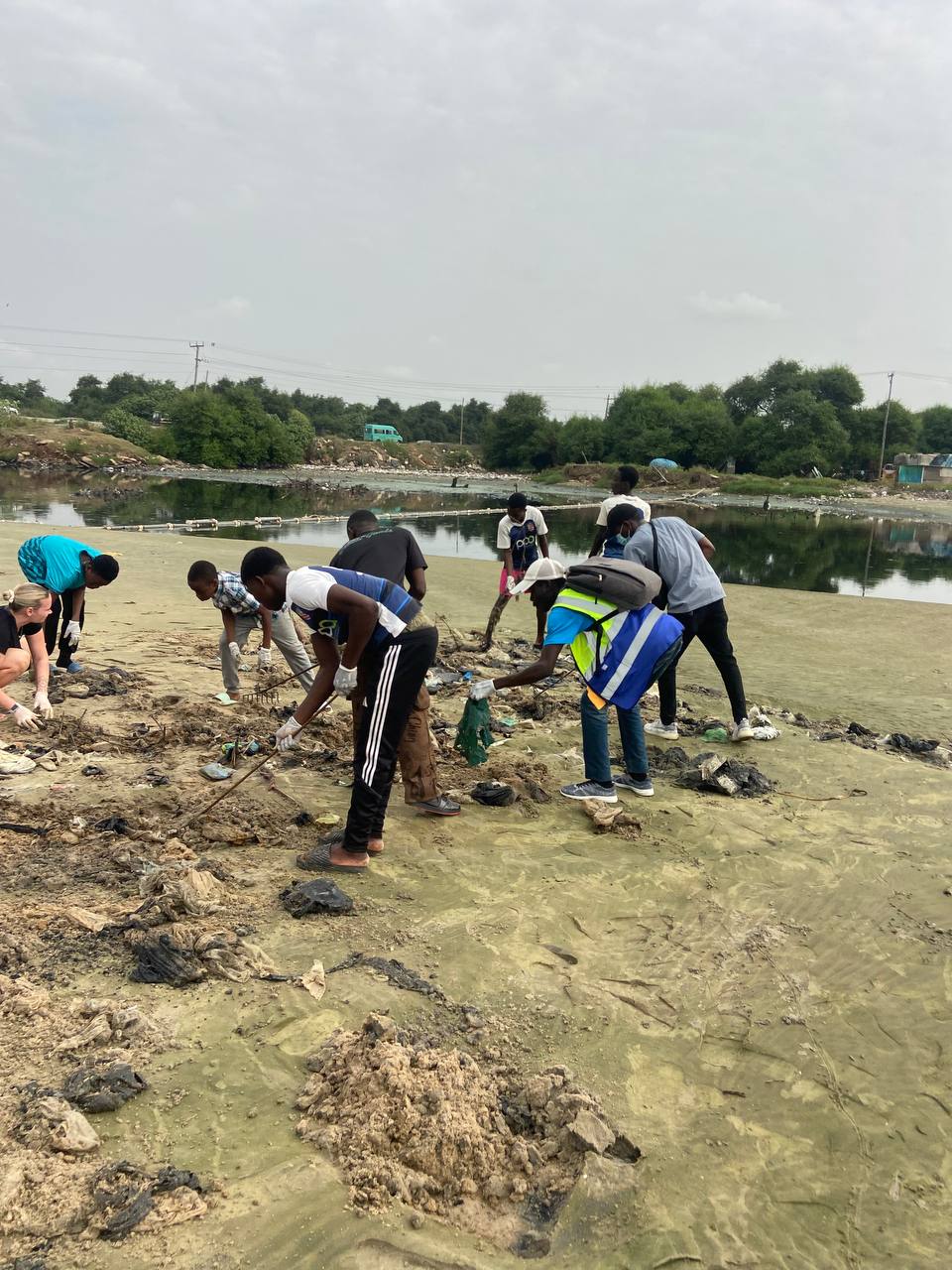
We mobilize volunteers through schools, churches, community groups, and social media. Each clean-up is framed as a community event, not a chore, with music, refreshments, and recognition for participants. Our typical clean-up attracts 50-100 volunteers and lasts 3-4 hours.
3. Waste Sorting and Data Collection
Volunteers sort waste into categories: recyclable plastic, glass, metal, organic, and general waste. We weigh and record each category, building a dataset that informs our advocacy and helps us track trends. In 2024, our clean-ups removed over 850 kilograms of waste, of which 40% was recyclable plastic.
4. Education and Behavior Change
Every clean-up includes an educational component. We brief volunteers on the environmental impact of waste, demonstrate proper sorting, and distribute reusable bags and water bottles to reduce future plastic consumption. We also engage passersby, turning the clean-up into a visible public education event.
5. Follow-Up and Sustained Engagement
After each clean-up, we work with the host community to establish a waste management plan, including regular collection points, community recycling stations, and ongoing monitoring. Our goal is not to return to the same site month after month but to build local capacity so the community can maintain cleanliness independently.
The Results
In 2024, GAIN organized 24 community clean-ups across Greater Accra, mobilizing over 1,200 volunteers and removing 850 kilograms of waste. But the numbers tell only part of the story. In communities where we have conducted three or more clean-ups, we have observed a 60% reduction in visible litter between clean-up events, suggesting lasting behavior change.
At Labadi Beach, where we have conducted six clean-ups since 2023, local vendors report that the beach is noticeably cleaner and that tourist foot traffic has increased. At a school in Tema where we conducted a clean-up and installed recycling bins, the school's environmental club now manages a weekly recycling programme that generates income from selling sorted plastic to recycling companies.
What You Can Do
You do not need to wait for an organized event. Pick up litter when you see it. Carry a reusable water bottle instead of buying sachet water. Separate your waste at home. Support businesses that use sustainable packaging. And if you want to organize a clean-up in your community, reach out to us. We provide gloves, bags, sorting guidance, and volunteer support at no cost.
A clean Ghana is possible. But it starts with each of us taking responsibility for the waste we create and the spaces we share.
References:
- Accra Metropolitan Assembly (AMA). (2023). Solid Waste Management Report 2023. Accra: AMA.
- Environmental Protection Agency Ghana. (2023). Plastic Waste Management in Ghana: Status Report. Accra: EPA Ghana.
- Journal of Environmental Psychology. (2021). "The impact of clean-up interventions on littering behavior in urban Nigeria." Vol. 74, pp. 101-115.
- United Nations Environment Programme (UNEP). (2023). Plastic Pollution in Africa: Assessment and Recommendations. Nairobi: UNEP.
- University of Cape Coast, Department of Environmental Science. (2022). Household Waste Disposal Practices in Urban Ghana. Cape Coast: UCC.
- Wilson, J. Q., and Kelling, G. L. (1982). "Broken Windows: The police and neighborhood safety." The Atlantic Monthly, March 1982, pp. 29-38.
- World Bank. (2022). What a Waste 2.0: A Global Snapshot of Solid Waste Management to 2050. Washington, DC: World Bank.
- Zoomlion Ghana Limited. (2024). Annual Waste Collection Report 2023. Accra: Zoomlion.
Share this post: